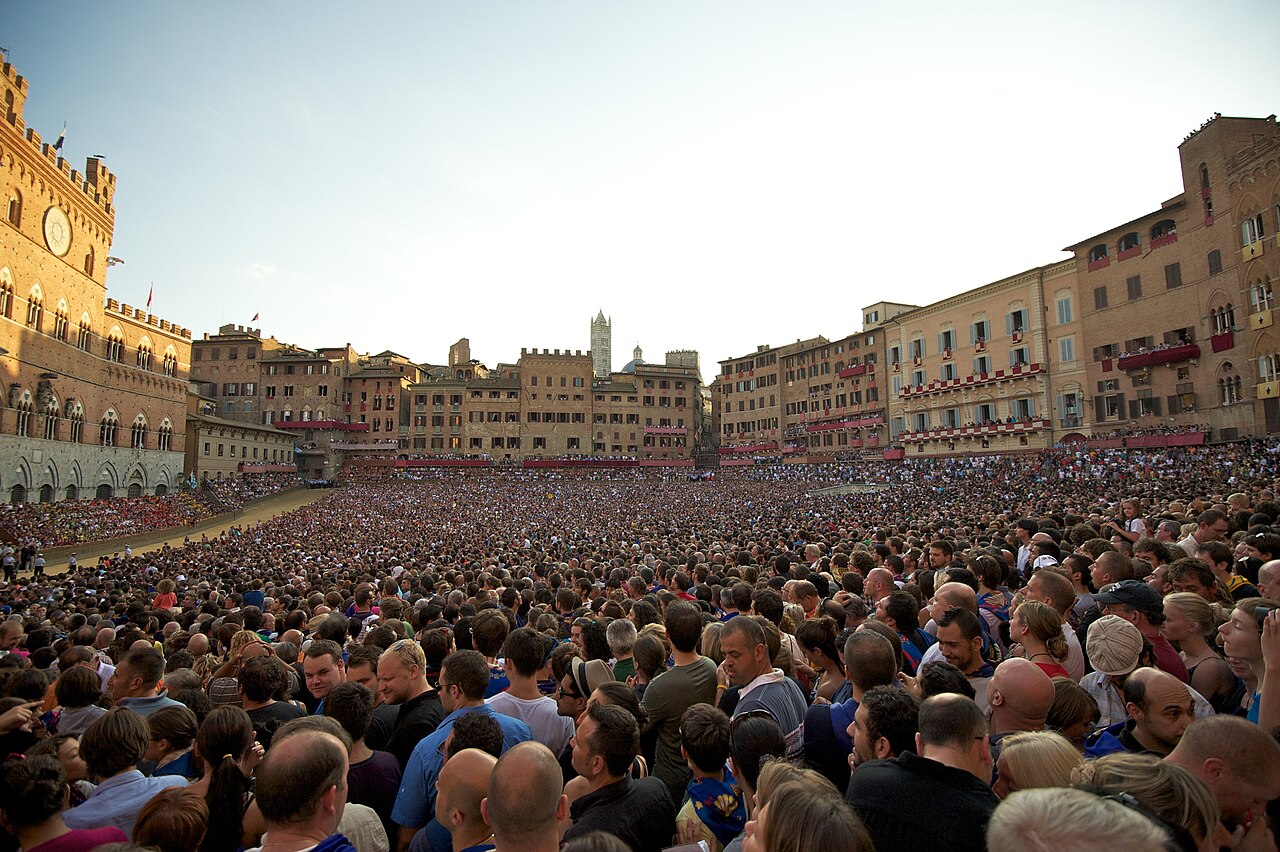
A visitor can watch the horses cross Piazza del Campo in minutes. A Sienese Contrada is still there when the square is empty. To understand the Palio, begin with that difference in time.
Siena has seventeen Contrade, historic neighbourhood communities with territories, elected organisation, social spaces and museums. Ten compete in a given ordinary Palio. The race is visible to a visitor; the calendar of relationships behind it continues through the year. A Contrada is not a decorative team colour to select for the afternoon.
Look at the Drappellone, the painted silk prize awarded to the winning Contrada. It is an artwork made for a particular occasion, carried into a network of local memory. Look also at a Contrada’s museum, when visits are available. What appears to an outsider as rivalry is held within a much larger pattern of belonging, ceremony and shared work.
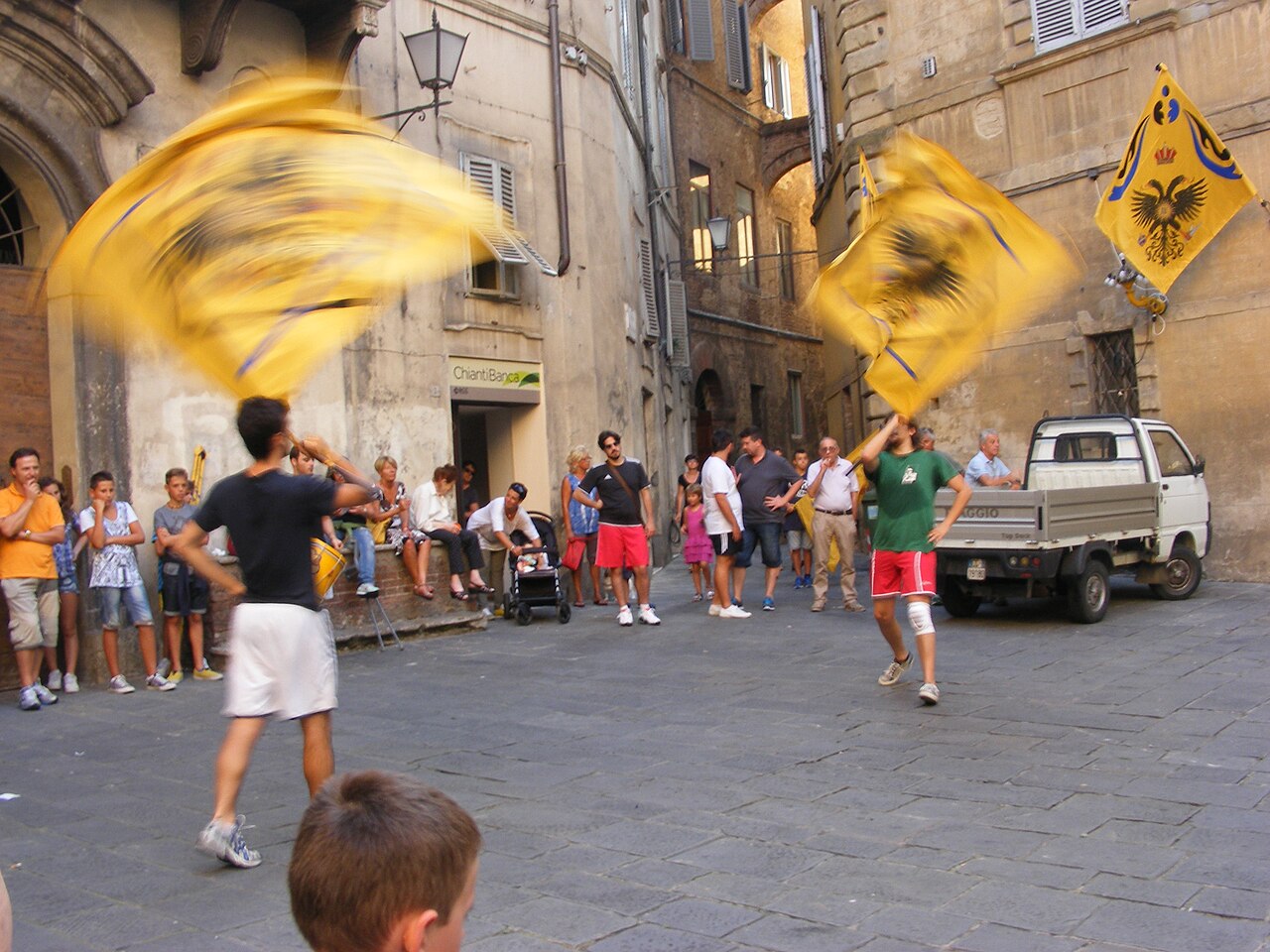
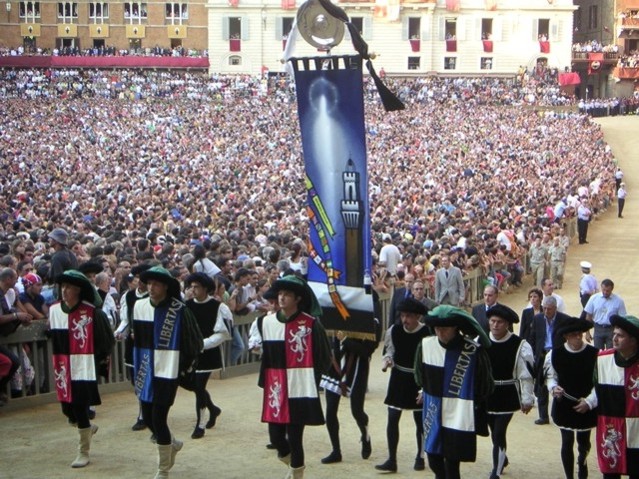
The respectful traveller does not need to pretend to become an insider. Learn the names, ask where visitors may stand, follow local guidance and recognise that religious spaces, preparations and celebrations may not be open as spectacles. If someone invites you to understand one part of the tradition, let that be enough.
The official city guide describes a tradition that culminates in the July and August races but continues in the social life of the Contrade throughout the year. Their territories, museums and elected organisation are not supporting scenery for the event. They are part of how a community remembers itself and gives people a role within it. The Drappellone is therefore more than a prize in a photograph: its image enters a history that belongs to a particular neighbourhood.
For an outsider, care is more useful than a claim of instant belonging. Read the city's visitor information, observe local boundaries and ask before photographing private or religious moments. A guided visit to a Contrada museum, when offered, gives context without pretending that a ticket grants membership in the life around it. The race remains spectacular. Understanding even a little of what surrounds it makes that spectacle less easy to consume and more difficult to forget.
The question to take away is not which colour to support, but what a community can carry together long after visitors have left the square.
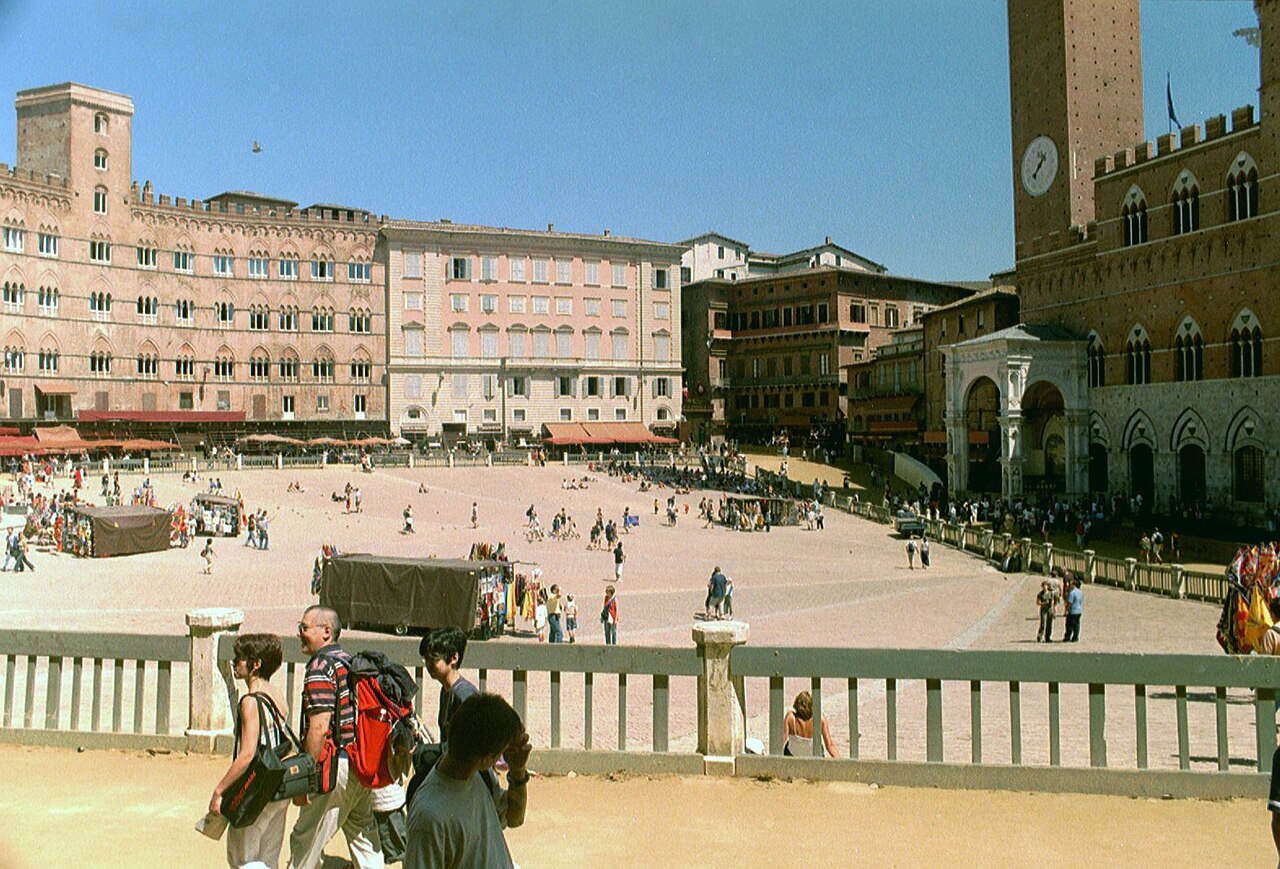
The race is visible to everyone. The relationships that give it meaning belong to people who live them all year. A visitor's privilege is to learn enough to see that distinction, then allow it to remain theirs.