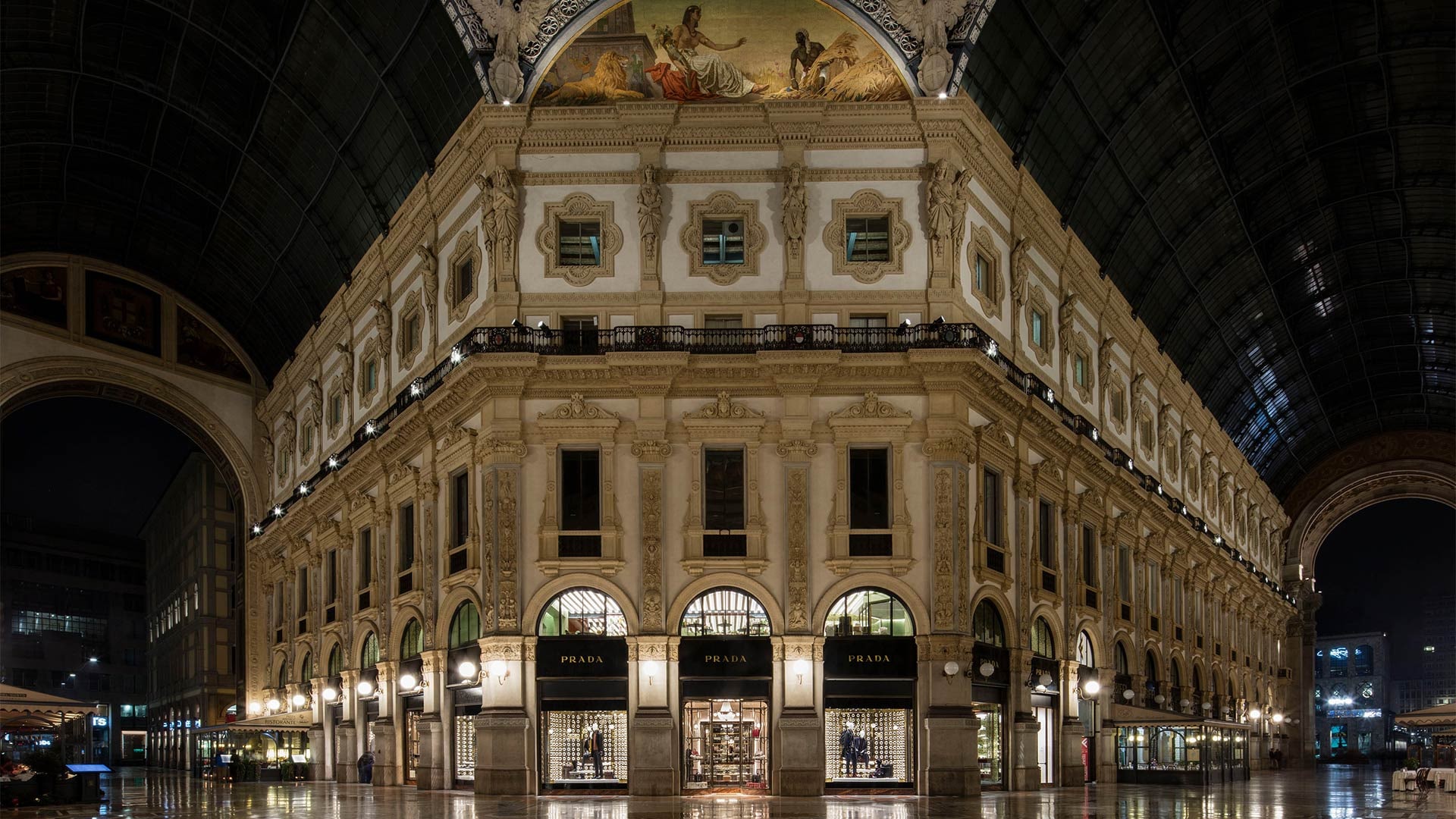
On September 23, Prada opens eight floors inside Milan’s Galleria Vittorio Emanuele II.
There are boutiques, of course.
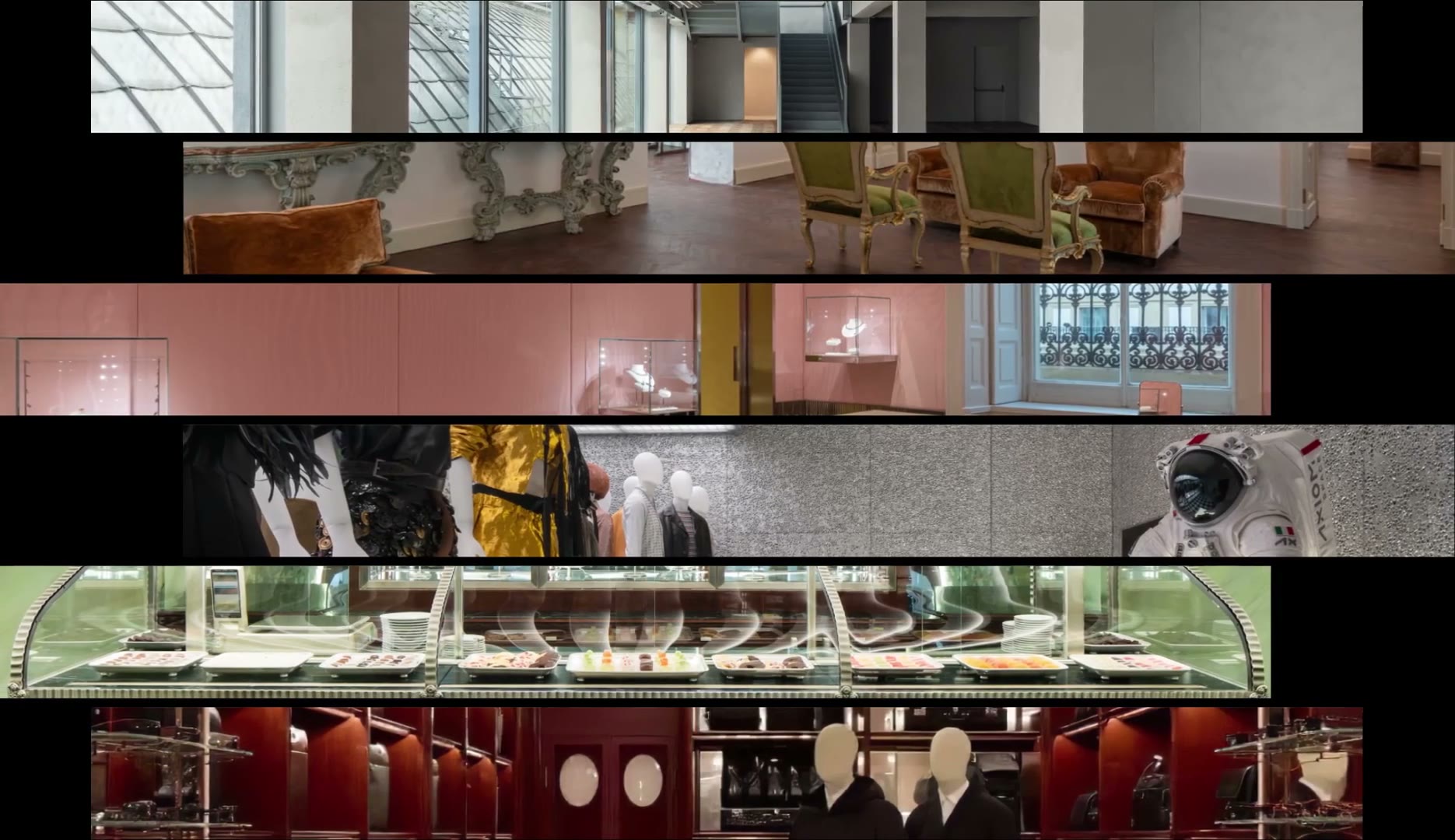
But also Marchesi 1824, the Osservatorio Fondazione Prada, private client spaces and Pradasphere, a permanent exhibition built from more than a century of the house’s history. The two sides of the Galleria are even connected through a new underground passage.
At first, this could look like another large retail expansion.
But the place makes that reading incomplete.
The Galleria Vittorio Emanuele II is where Mario Prada opened the first Fratelli Prada store in 1913.
More than a century later, Prada is not simply adding square metres around the original boutique. It is turning the place where the brand began into a physical expression of everything the brand has become.
You can shop.
You can have an aperitivo at Marchesi.
You can visit an exhibition.
You can move through art, fashion, archives, hospitality and the history of the company without ever really leaving the same universe.
That is what makes Prada Galleria more interesting than a bigger store.
It gives us a way to see something that is easy to forget when we talk about value.
A product has functional characteristics.
A bag has leather, construction, hardware, proportions and a purpose.
But our decision to desire it rarely stops there.
Take a bag we love.
We may notice the leather first. Then the shape, the stitching or the way it sits on the body.
But somewhere between seeing it and wanting it, something else happens.
We begin to imagine ourselves with it.
The object becomes attached to taste, identity, memory, belonging, aspiration or to a certain idea of the person we believe ourselves to be.
Its value is no longer only contained in the object.
Part of it now exists in what the object means.
This is particularly important in luxury and craft, where the difference between two products cannot always be explained through function alone.
A handmade object may take longer to produce. It may contain rarer material, greater technical knowledge or more demanding construction.
Those things matter.
But the businesses that become culturally relevant usually build another layer around them: a recognisable world.
Prada Galleria makes that world unusually literal.
The historic store still sells fashion, but now the visitor can also encounter Prada through pastry, exhibitions, architecture, books, archival objects and private hospitality.
Prada itself describes the project not as one singular identity repeated across mediums, but as an identity formed through accumulated exchanges and experiments across art, architecture, cinema, culture and sport.
This does not mean every independent business needs eight floors in Milan.
Probably the opposite.
The useful lesson is not the scale of Prada Galleria.
It is the structure behind it.
A strong brand gives people more than a product to recognise.
It gives them a language.
A point of view.
A set of references.
A way of understanding why that product belongs in their life.
For an independent craft business, that world might be built through something much smaller: the architecture of a workshop, the way a commission begins, the materials it refuses to replace, the objects kept in an archive, the places connected to its history, the way a client is received, or the cultural references that continue to shape the work.
None of these things are decorative when they are real.
Together, they explain why this business could not easily be another one.
And perhaps that is the more interesting question Prada Galleria leaves us with.
Not how big a store can become.
But how far a business can expand its world before the product is no longer the only thing we came to experience.