The Øriginal Journal
How to Raise Prices and Keep Desire Alive
The Apple strategy every craft brand should leverage
By Lu · 12 September 2026
Apple has just launched a $1,999 iPhone that folds.
It opens into the largest display ever used on an iPhone. Its hinge contains more than one hundred components. It is made from titanium and arrives with the kind of technological novelty that naturally attracts attention.
But the most interesting part of Apple’s launch may not be the new iPhone, it is what happened to the old ones:
Alongside its first foldable iPhone, Apple introduced the iPhone 18 Pro, starting at $1,199 in the United States. That is $100 more than the previous Pro generation.

Then something less expected happened.
Instead of making every earlier model cheaper, Apple increased the official US prices of four iPhones already in its range by $100 each.
Even the old product became more expensive. Why?
The immediate explanation is practical. A global shortage has placed unusual pressure on memory and storage costs.
But the strategic effect goes deeper.
Over time, Apple has built a system in which previous generations remain useful, supported and resellable.
Rather than teaching customers that yesterday’s iPhone is worthless, its software support, trade-in programme and secondary-market demand help extend the life of its value.
This has taught customers something important:
Price does more than protect margin. It protects confidence in the value of the object.
That confidence affects the brand’s reputation, trade-in values and the price its products can retain in the secondary market.
Apple itself reported that, as of March 2026, an iPhone 8 introduced in 2017 still had monetary value through Apple Trade In in the United States.
That difference reveals something fundamental for craft brands.
If something desirable today is treated as outdated, heavily discounted or almost worthless a few months later, the customer learns a lesson:
Do not trust the original price. It was probably overpriced.
The consequence is simple:
- Wait for the discount.
- Question the full price.
- Feel that buying early was a mistake.
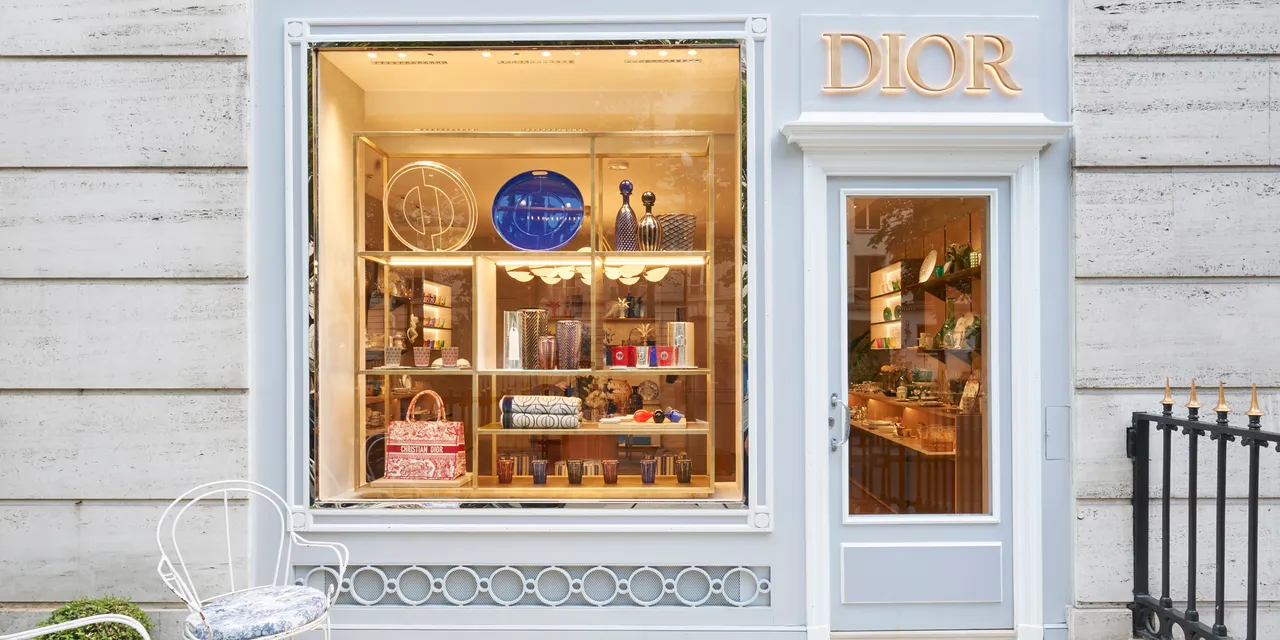
This is why the luxury houses with the strongest pricing power protect their full-price integrity through controlled distribution, limited discounting, continuity, repair and careful management of previous collections.
A useful way to understand this is to think like a great wine house.
Each vintage has its own conditions, personality and expression. A new vintage does not need to make the previous one less special. It does not need to be better or worse. It has its own value, and that value deserves to be respected.
The same principle matters to an independent atelier:
- A new collection does not need to make the previous one feel old.
- A piece made last year does not become less relevant because another piece has just arrived.
- An object created slowly should not be treated as disposable simply to create urgency around what comes next.
Of course, a higher price does not automatically create greater value.
Without better design, materials, performance, service, durability or meaning, a price increase is simply a higher number.
But when the substance is real, pricing can help protect it:
- It tells customers that the object was not created only for a launch window.
- It resists the habit of training people to wait for a sale.
- It gives existing clients confidence that what they chose has meaning and value.
- It allows something new to arrive without publicly diminishing everything that came before it.
Perhaps the question is not only how much the new object should cost.
It is: