The Øriginal Journal
From Unwanted to Cool: How to Creatively Break Marketing’s Rules
The Vienna State Opera, Hermès and the difference between making something visible and making it noisy.
By Lu · 10 September 2026
Since 1998, the 176-square-metre safety curtain separating the auditorium from the stage at the Vienna State Opera has become a temporary exhibition space for contemporary art.
The project is called Safety Curtain. During the 2025/26 season, the curtain carried XOHANAMI by El Anatsui. Its title means “Receive our Song” in Ewe.
On 9 September 2026, a work by Herbert Brandl took its place for the 2026/27 season.
Audiences encounter the work before performances, during intervals and as they prepare to leave.
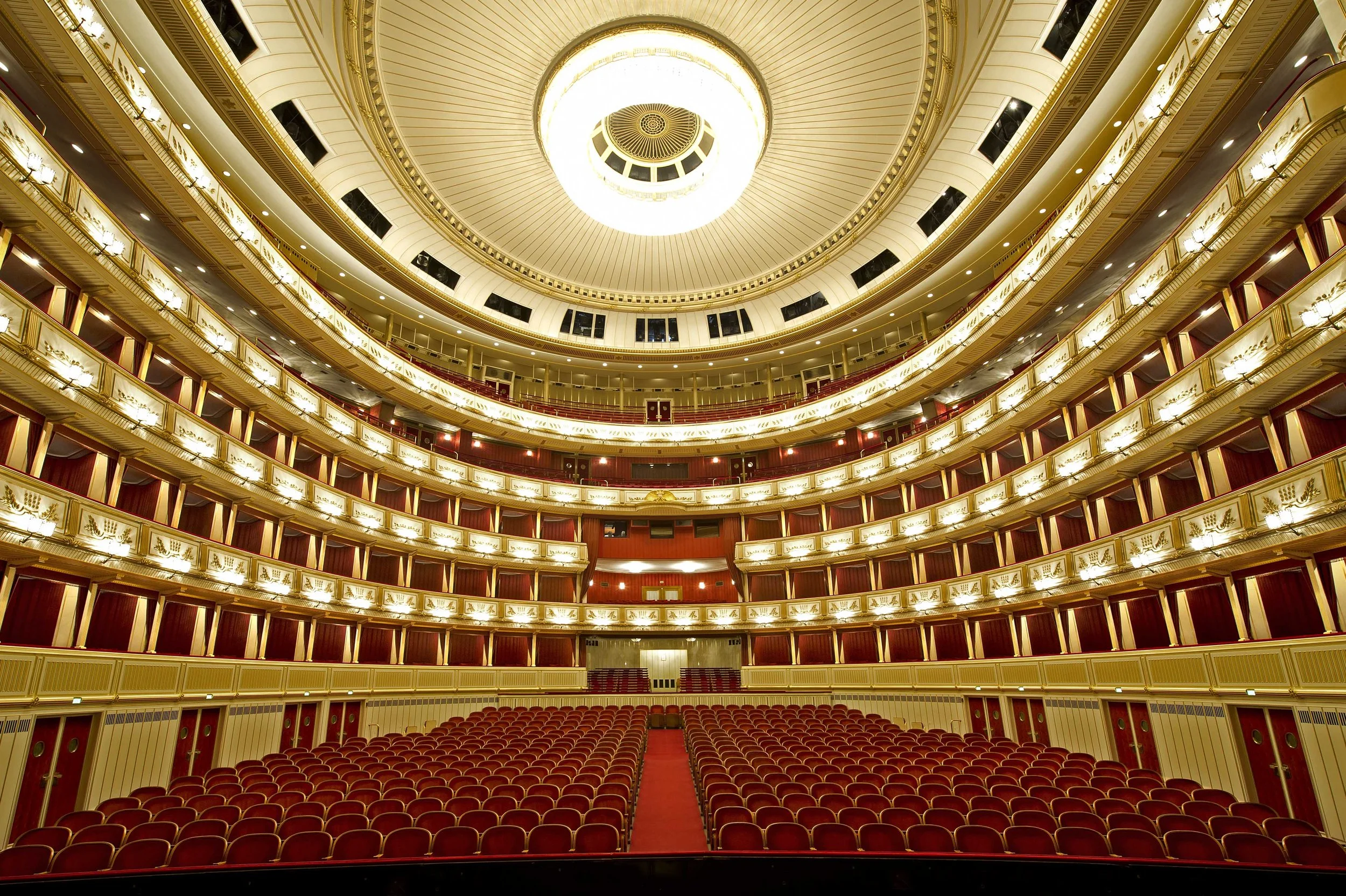
It is such a creative and inspiring way to bring visibility to artists that nobody would describe it as an advertisement.
Yet it places a work before thousands of people, gives it their attention and allows it to meet people who may otherwise never have thought to look for it.
If the curtain carried a brand logo instead, we would recognise the same underlying function as advertising. The experience would feel completely different, wouldn’t it?


Why? Let’s try to get to the bottom of it.
We tend to resist the words marketing and sales because we have learned to associate them with pressure:
an unwanted interruption;
a message repeated until somebody gives in;
an attempt to create desire where none existed;
a way of forcing itself into a room where it does not belong;
or simply persuading us to buy something we neither need nor want.
The traditional philosophy of showing up everywhere until something reaches someone may have helped create this negative impression.
The natural consequence is resistance.
But imagine that you are looking for something specific and, no matter how much you search, you cannot find it. Then, almost like magic, it appears in an advertisement.
That would be useful, wouldn’t it?
Perhaps the problem was never marketing itself. Perhaps it was the timing and the way the message entered our lives, because at the right moment, visibility is not an intrusion. It is welcomed.
Another example: consider something almost comically simple: bananas.
If you dislike bananas and every screen insists on showing you bananas, advertising becomes noise.
If you are already looking for bananas and someone shows you where to find good ones, the same mechanism becomes useful.
The advertisement has not changed its name. Relevance has changed its meaning.
Marketing and sales are not good or bad because of the words we use for them. Their value depends on intention, context and the relationship they create.
This is why the story often repeated about Hermès is so revealing.
It is frequently said that Hermès has no marketing department. Regardless of the label the organisation uses, the idea is often interpreted as though Hermès became one of the world’s most recognisable houses without marketing.
Its own reporting tells a more precise and more interesting story: Hermès speaks of its “singular communication”. Its individually conceived stores, windows, events, digital flagship, services and stories all contribute to the world surrounding its objects.
Hermès did not become desirable by remaining invisible. What makes the house interesting is that its communication rarely appears detached from what it creates.
The object, the store, the window, the repair, the controlled production, the event and the story reinforce one another.
Communication does not need to compensate for an absence of substance. It extends the logic of the object.

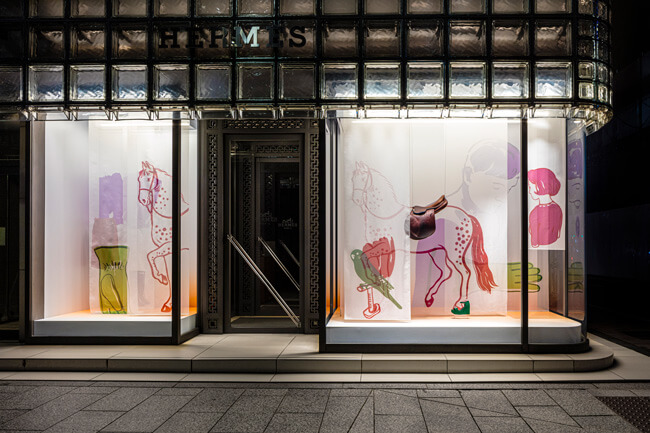
This is a far more useful lesson than the fantasy of a house succeeding without marketing, because exceptional work does not automatically find the people capable of recognising it.
A maker can spend years developing judgement, technique and a point of view, yet remain unseen.
The right strategy reveals what was already there. The wrong one can flatten the mystery and desire around it.
For us at Ca’Øriginale, this is the distinction that matters.
The ambition is not to make every creator louder. Nor is it to transform every artist, artisan or independent founder into a permanent producer of content.
It is to build contexts in which original work can be discovered, understood and desired by the people for whom it may hold real meaning.
Sometimes that context is an article. Sometimes it is a film, an event, a journey, a conversation or an introduction made at the right moment.
The format is secondary.
The real questions are these:
Does this visibility help people understand the work without making it less itself?
Does it bring the right people closer?
Does desire grow from meaning rather than noise?
Can attention become a relationship?
If the answer is yes, marketing has not interrupted the work. It has opened the curtain.
What is something extraordinary you only discovered because someone knew how to make it visible?